
Turkish Food Vocabulary and Dining Culture: How Meals Shape Conversation
 Posted by
 In Turkey, food is rarely only about eating. A meal is a social moment where people welcome guests, show care, exchange news, tell stories, and keep relationships warm. For learners of Turkish, this means food vocabulary is cultural vocabulary. Words such as çay [tea], kahve [coffee], ekmek [bread], kahvaltı [breakfast], and yemek [meal/food] are useful because they appear in daily life, but they also carry social meaning.
Turkish meals shape conversation because the table gives people a natural reason to speak. Someone offers more food, another person refuses politely, the host insists, tea is refreshed, and the conversation continues. Learners who understand this rhythm can do more than name dishes. They can take part in the small exchanges that make Turkish dining feel warm, generous, and personal.
In this guide, I’ll explain the Turkish food words and dining phrases learners hear most often, the role of hospitality at the table, how tea and breakfast shape conversation, and why understanding Turkish dining culture helps you speak more naturally in homes, cafés, restaurants, and everyday social situations.
→Sign Up Now: Free Trial Turkish Lesson With a Native Teacher!←
The Role of Hospitality in Turkish Dining Culture
Hospitality is one of the most important parts of Turkish dining culture. When someone invites you to eat, offers tea, brings homemade food, or insists that you try one more piece of something, they are often doing more than feeding you. They are showing attention, generosity, and respect. This is why Turkish food language is full of expressions for offering, accepting, refusing, complimenting, and thanking.
In my experience, learners sometimes understand the vocabulary but miss the social action behind it. A phrase like Biraz daha alır mısın? [Would you like some more?] is not only a question about hunger. It can also mean “I want you to feel welcome.” A polite refusal may not always close the exchange immediately, because the host may offer again as a sign of care. This pattern is one of the clearest examples of how Turkish dining culture turns food into conversation.
How Offering Food and Drink Shows Care in Turkey
Offering food and drink is one of the most common ways Turkish people show care. When a guest arrives, it is natural to offer çay, kahve, something sweet, or a small plate of food. In many homes, the offer comes quickly because making someone feel welcome is part of the visit itself. Even a simple glass of tea can say, “Please sit, stay, and feel comfortable.”
This is why learners need to pay attention to the language of offering. Phrases such as Buyurun [Please, go ahead / help yourself], Biraz daha ister misin? [Would you like a little more?], and Çayını tazeleyeyim mi? [Shall I refresh your tea?] are small but culturally important. They help keep the interaction going and create space for warmth. The food or drink is important, but the gesture around it is just as meaningful.
There is also a polite rhythm around accepting and refusing. A guest may say Doydum, teşekkür ederim [I am full, thank you] or Çok teşekkür ederim, çok güzeldi [Thank you very much, it was delicious], while the host may still encourage them to eat a little more. For English speakers, this can feel surprising at first. But in Turkey, insistence often belongs to the language of generosity, not pressure. Understanding that difference helps learners respond more naturally.
Why Tea, Coffee, and Homemade Food Matter So Much in Turkey
Tea, coffee, and homemade food matter because they are connected to time, attention, and conversation. Çay is part of everyday life in Turkey. It can begin a visit, fill a pause, extend a conversation, or soften a serious moment. Even after a meal has finished, asking Bir çay daha içer misin? [Would you like another tea?] may mean “You do not have to leave yet.”
Türk kahvesi [Turkish coffee] has a different rhythm. It is usually slower, more concentrated, and often connected to conversation after a meal or during a visit. Offering coffee can make a guest feel honoured, especially when it is prepared carefully. Learners who know the word kahve only as a drink miss part of the cultural meaning: it can also mark hospitality, attention, and a moment of shared time.
Homemade food carries another kind of emotional value. When someone prepares food for you, they are giving time and effort, not only ingredients. That is why expressions such as Eline sağlık [Health to your hand / Thank you for the food you made] matter so much. They recognize the person behind the meal. In Turkish dining culture, appreciation is not saved only for the end. It can appear throughout the meal, with comments like Çok güzel olmuş [It turned out beautifully / It is delicious], small compliments, and gestures of gratitude.
Essential Turkish Words for Everyday Meals
A word like çay is a drink, but it is also a reason to sit down and talk. – Nisan Tosunlar
Food vocabulary is one of the most useful parts of Turkish for daily life because meals come up constantly: at home, at work, at cafés, in markets, and in invitations. But these words are not only practical. They also help learners understand how Turkish people organise the day, welcome guests, share food, and keep conversation going. A word like çay [tea] is a drink, but it is also a reason to sit down and talk.
Turkish Words for Meals, Drinks, and Basic Foods
Learners can start with the words they are most likely to hear every day: kahvaltı [breakfast], öğle yemeği [lunch], akşam yemeği [dinner], yemek [food/meal], su [water], çay, kahve [coffee], and ekmek [bread]. These words appear in simple questions such as Çay içer misin? [Would you like tea?], Yemek yedin mi? [Have you eaten?], or Bir şeyler yiyelim mi? [Shall we eat something?]. In Turkish, asking about food can also be a way of showing care, especially with family, guests, or close friends.
Other basic words quickly become useful at the table: peynir [cheese], zeytin [olives], yumurta [egg], domates [tomato], salatalık [cucumber], pilav [rice/pilaf], et [meat], tavuk [chicken], balık [fish], sebze [vegetable], çorba [soup], and tatlı [dessert]. Learners do not need to memorize all Turkish food vocabulary at once. It is better to learn these words through real situations: reading a menu, setting a breakfast table, visiting a market, or practising how to offer and accept food.
Turkish Words for Common Dishes, Snacks, and Desserts
Some Turkish food words refer to dishes learners will see very often. Döner [rotating grilled meat], kebap [grilled meat dish], lahmacun [thin flatbread with minced meat and spices], börek [filled pastry], gözleme [stuffed flatbread], mantı [Turkish dumplings], simit [sesame bread ring], and meze [small shared appetiser] are common in restaurants, bakeries, street food, and family meals. These words are useful not only because they help learners order food, but because many of them are connected to shared eating.
Desserts and sweets also carry cultural meaning. Baklava [layered pastry with nuts and syrup], lokum [Turkish delight], sütlaç [rice pudding], and kazandibi [caramelised milk pudding] often appear after meals, during visits, or with tea and coffee. If someone offers you something sweet, the gesture may be part of hospitality rather than a simple question about whether you are hungry. This is why learners should connect dish names with the situations in which they appear.
Turkish Breakfast as a Social Ritual
Turkish breakfast is one of the clearest examples of how food becomes conversation. Kahvaltı is often translated simply as “breakfast,” but in Turkey it can be a long, shared, social meal, especially at weekends. The table may include cheese, olives, tomatoes, cucumbers, eggs, bread, honey, jam, pastries, and repeated glasses of tea. The important point is not only what is on the table, but how people sit around it.
Why Turkish Kahvaltı Is More Than Breakfast
Kahvaltı is more than breakfast because it often creates time for people to be together. A quick breakfast is possible, of course, especially on busy weekdays, but a long Turkish breakfast has a different rhythm. People eat slowly, pour more tea, pass small plates, talk about family news, discuss work, remember old stories, and move naturally between serious subjects and jokes. The meal gives the conversation a structure without making it feel formal.
Growing up in İzmir, I remember breakfasts where the plates were almost empty, but nobody stood up because the conversation was still alive. Tea kept arriving, someone added one more piece of bread, and the table became a place where people could stay connected without saying, “Let’s have an important conversation.” For learners, this is a valuable cultural lesson: in Turkey, food often creates the space for closeness.
How Shared Plates Keep the Conversation Going in Turkey
Shared plates keep the conversation going because they make people interact with each other throughout the meal. Instead of everyone focusing only on an individual plate, people pass food, offer more tea, ask if someone wants bread, and check whether others have tried a dish. Simple phrases such as Peyniri uzatır mısın? [Could you pass the cheese?], Biraz daha alır mısın? [Would you like some more?], and Çayını tazeleyeyim mi? [Shall I refresh your tea?] become part of the social rhythm of the table.
This shared style also teaches learners that Turkish dining language is relational. A plate in the middle of the table creates small opportunities for politeness, humour, care, and attention. Someone offers olives, someone compliments the eggs, someone says Eline sağlık [Health to your hand / Thank you for the food you made], and the conversation continues. The vocabulary is simple, but the social meaning is rich.
Food Phrases Learners Hear at the Table
Some of the most important Turkish dining phrases are short, but they carry a lot of cultural meaning. They help people offer food, praise the cook, welcome guests, encourage others to eat, and show appreciation. For learners, these expressions are often more useful than a long list of dish names because they appear again and again in real meals.
How to Use Afiyet Olsun, Eline Sağlık, and Ziyade Olsun
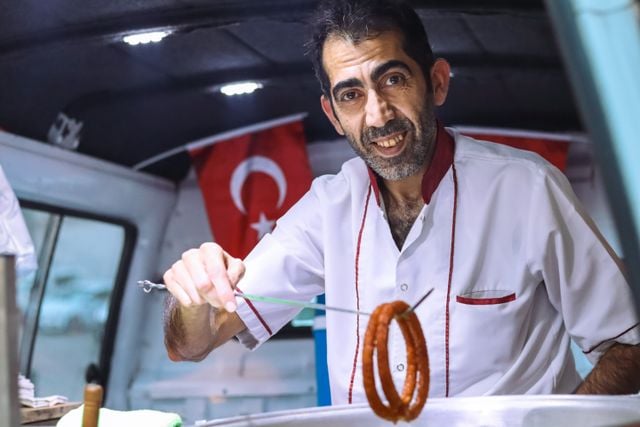
Afiyet olsun [may it be good for you / enjoy your meal] is one of the first dining expressions learners should know. It can be said before, during, or after someone eats. There is no perfect English equivalent because it is not only “bon appétit.” It is also a polite wish that the food brings enjoyment and well-being. You can say it when serving someone, when seeing someone eat, or when leaving a table where people are still eating.
Eline sağlık [health to your hand] is used to thank and compliment the person who prepared the food. It is warmer than a simple teşekkür ederim [thank you] because it recognizes the effort, care, and skill that went into cooking. In a more formal or plural form, learners may also hear ellerinize sağlık [health to your hands]. Ziyade olsun [may it bring you well-being] is another traditional response connected to eating, often used after someone says afiyet olsun. These phrases show how Turkish table language turns appreciation into a small social ritual.
How to Offer, Accept, Refuse, and Thank Politely in Turkish
Offering food politely is central to Turkish dining culture. Learners may hear phrases such as Biraz daha alır mısın? [Would you like some more?], Buyurun [please, go ahead / help yourself], Çay ister misin? [Would you like tea?], or Tatlı alır mısın? [Would you like dessert?]. These phrases do more than move food around the table. They keep the interaction warm and show that the host is paying attention to the guest.
Accepting and refusing also require tact. A simple Hayır [no] can sound too abrupt in a warm family setting. A more natural response would be Çok teşekkür ederim, çok güzeldi ama doydum [Thank you very much, it was delicious, but I am full]. If learners want to accept, they can say Biraz alayım [I’ll have a little] or Teşekkür ederim. If they want to compliment the food, Çok güzel olmuş [It turned out beautifully / it is delicious] is very useful. These expressions help learners sound polite, grateful, and culturally aware.
How Turkish Meals Shape Conversation
Turkish meals shape conversation because the table creates a natural reason for people to stay together. People do not always sit down and announce that they want to talk about family, work, memories, or personal problems. Instead, the meal opens the space. Food is served, tea arrives, someone offers more bread, and conversation begins to move.
Why Turkish Meals Create Space for Stories, Advice, Humour, and Family Updates
A Turkish meal can move very quickly from food to stories. Someone asks whether you have eaten, someone else mentions a relative, and soon the conversation turns to work, health, travel, politics, childhood memories, or family news. This can feel intense for learners from cultures where meals are quieter or more individual, but in Turkey it often shows warmth and involvement.
I remember long family meals in İzmir where the food was almost finished, but nobody really wanted to leave the table. One person would ask, İşler nasıl gidiyor? [How is work going?], someone else would interrupt with a joke, and then an older relative would turn the same moment into advice: Kendine çok dikkat et, çok yoruluyorsun [Take good care of yourself, you are getting too tired]. The meal gave everyone permission to speak, listen, tease, advise, and reconnect without making the conversation feel formal.
A typical exchange might sound like this. (In the dialogue below, misafir means “guest,” and ev sahibi means “host.”)
Misafir: Çok güzel olmuş, eline sağlık. [It is delicious, health to your hand / thank you for making it.]
Ev sahibi: Afiyet olsun. Biraz daha alır mısın? [Enjoy it. Would you like some more?]
Misafir: Azıcık alayım. Bu arada annen nasıl? [I’ll have a little. By the way, how is your mother?]
Ev sahibi: İyi, iyi. Geçen hafta bize geldi, yine eski hikâyeleri anlattı. [She’s well. She came to visit us last week and told the old stories again.]
This is why food vocabulary should be taught with real dialogue. Learners need to understand not only what the words mean, but how meals create the conditions for conversation. The food opens the exchange, but the real communication often happens in the comments, follow-up questions, jokes, and small acts of attention around the table.
How Tea Extends Visits and Keeps Conversation Open in Turkey
Tea is one of the clearest examples of how Turkish food culture keeps conversation open. A glass of çay [tea] can begin a visit, accompany a meal, fill a pause, or extend the time people spend together. Even after the plates are cleared, tea may continue to arrive. When someone asks Bir çay daha içer misin? [Would you like another tea?], the deeper message may be “Stay a little longer.”
A simple tea exchange can carry more social meaning than the words suggest:
Ev sahibi: Bir çay daha içer misin? [Would you like another tea?]
Misafir: Olur, teşekkür ederim. [Yes, thank you.]
Ev sahibi: Demli mi olsun, açık mı? [Would you like it strong or light?]
Misafir: Açık olsun, lütfen. [Light, please.]
Ev sahibi: Tamam, o zaman biraz daha oturuyoruz. [All right, then we are staying a little longer.]
This is why tea is so important for learners to understand. It is not only a drink. It is part of the rhythm of social life. In a home, a workplace, a café, or a family visit, tea gives people a way to continue the conversation without forcing it. Accepting another glass can mean accepting more time together, and offering another glass can be a gentle way of showing that the guest is still welcome.
Politeness, Refusal, and Insistence Around Food in Turkey
Politeness around food in Turkey often works through a small exchange: the host offers, the guest refuses politely, the host insists, and the guest may accept a little more. This pattern can surprise English speakers because the words alone do not always tell the whole story. A first refusal may be sincere, but it may also be part of a polite rhythm in which the guest avoids seeming too eager and the host shows generosity.
Why Turkish Hosts Often Offer More Than Once
Turkish hosts often offer more than once because generosity is part of good hospitality. If a guest says they are full, the host may still say Biraz daha al [Have a little more] or Çok az koyayım [Let me give you just a little]. This does not necessarily mean the host is ignoring the guest. In many situations, it means they want to make sure the guest feels cared for and welcome.
Of course, this depends on the relationship, the family, and the setting. Not every Turkish person insists in the same way. But learners should understand that repeated offering is often ritualised. The interaction is not only about appetite; it is about attention. The host wants to show abundance, and the guest is expected to respond with warmth and appreciation, even when refusing.
How to Refuse Food Politely Without Sounding Abrupt in Turkey
To refuse food politely, learners should avoid sounding too final or cold. Saying only Hayır can feel abrupt, especially in a home. A softer answer gives a reason, thanks the host, and often compliments the food. For example: Çok teşekkür ederim, çok güzeldi ama gerçekten doydum [Thank you very much, it was delicious, but I really am full]. This sounds much warmer because it recognizes the host’s effort.
Learners can also use phrases such as Şimdilik almayayım [I won’t have any for now], Belki sonra [Maybe later], or Eline sağlık, çok güzeldi [Thank you for the food, it was delicious]. These small additions matter because Turkish dining culture values tone as much as literal meaning. A polite refusal should still keep the relationship warm.
Eating Out in Turkey: Useful Vocabulary and Cultural Tips
Eating out in Turkey gives learners many opportunities to use practical Turkish in a natural setting. Restaurants and cafés are also good places to observe politeness, pacing, and Turkish hospitality. A meal may begin with soup or meze, continue with a main dish, and end with tea, coffee, or dessert, so learners hear repeated phrases for ordering, offering, thanking, and asking questions.
Useful Turkish Restaurant and Café Vocabulary
The most useful words for eating out include menü [menu], garson [waiter], masa [table], hesap [bill], sipariş [order], çorba [soup], meze [small shared appetiser], ana yemek [main course], tatlı [dessert], içecek [drink], and su [water]. Learners may also hear açık çay [light tea], demli çay [strong tea], Türk kahvesi [Turkish coffee], ayran [yoghurt drink], or şalgam [fermented turnip drink], depending on the place and region.
Some restaurant phrases are especially useful because they make the interaction smoother. Menü alabilir miyim? [Can I have the menu?], Tavsiye eder misiniz? [What would you recommend?], Bu acı mı? [Is this spicy?], İçinde ne var? [What is in it?], Vejetaryen seçenek var mı? [Is there a vegetarian option?], and Hesabı alabilir miyim? [Can I have the bill?] are practical sentences learners can use immediately. In Turkish, sounding polite often depends on small forms such as alabilir miyim? [can I have?] and lütfen [please], rather than translating English restaurant phrases word for word.
How to Order, Ask About Ingredients, and Request the Bill
When ordering in Turkish, learners can keep the structure simple and polite. Bir mercimek çorbası alabilir miyim? [Can I have a lentil soup?], Bir döner istiyorum [I would like a döner], or Kahve alabilir miyim? [Can I have coffee?] are enough for many situations. If the learner has dietary needs, it is useful to ask directly: Et var mı? [Is there meat?], Süt ürünü var mı? [Is there dairy?], Acısız olabilir mi? [Can it be without spice?], or Alerjim var [I have an allergy].
A short restaurant exchange might sound like this:
Müşteri: Merhaba, menü alabilir miyim? [Hello, can I have the menu?]
Garson: Tabii, buyurun. [Of course, here you are.]
Müşteri: Bu yemeğin içinde et var mı? [Is there meat in this dish?]
Garson: Hayır, sebzeli. [No, it has vegetables.]
Müşteri: O zaman bir tane alayım, lütfen. [Then I’ll have one, please.]
Müşteri: Hesabı alabilir miyim? [Can I have the bill?]
This kind of practice is important because eating out is not only about vocabulary. Learners need to ask politely, listen to recommendations, clarify ingredients, and respond naturally. A restaurant dialogue helps them connect food words with real interaction.
Regional Turkish Foods and Local Identity
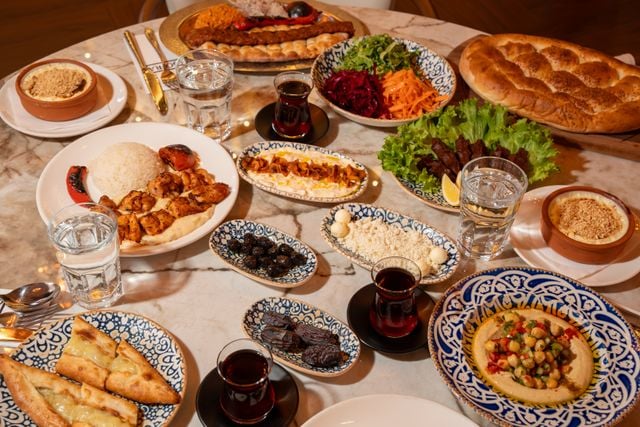
Turkish cuisine varies strongly by region because Turkey’s geography, climate, history, and local products differ so much across the country. It is useful to think of Turkish cuisine as a group of regional food cultures rather than one single national menu. The Black Sea is known for fish, especially hamsi [anchovy], corn, and dishes shaped by a rainy northern climate. The Aegean and Mediterranean regions are closely associated with olive oil, vegetables, herbs, seafood, and lighter shared dishes. Central Anatolia is known for grains, pastries, mantı [Turkish dumplings], and hearty home cooking, while the southeast is famous for kebabs, spices, pistachios, baklava, and rich meze traditions.
For learners, this matters because food vocabulary often reveals where someone is from. If someone talks about hamsili pilav [anchovy pilaf], they may be referring to the Black Sea. If they mention Antep baklavası [Gaziantep baklava] or Adana kebabı [Adana kebab], they are pointing to the southeast and south. If they talk about olive oil dishes, wild herbs, artichokes, or long meze tables, they may be evoking the Aegean. These names are not only menu items. They carry regional memory, pride, and family identity.
How Turkish Cuisine Changes by Region
In the Black Sea region, food is shaped by the sea, mountains, rain, corn, tea cultivation, and local greens. Hamsi appears in many forms, from fried anchovies to rice dishes, while corn flour and dairy are also important in regional dishes such as mıhlama [cornmeal and cheese dish]. In the southeast, cities such as Gaziantep, Şanlıurfa, and Adana are strongly associated with kebabs, pepper, pistachios, baklava, and syrup-based desserts such as künefe [cheese pastry dessert]. The food tends to be bolder, more spice-forward, and deeply connected to local craft traditions.
The Aegean and Mediterranean regions have a different profile. Olive oil is central, and the table often includes vegetables, herbs, fish, meze, stuffed vegetables, and seasonal produce. Dishes called zeytinyağlı [cooked with olive oil] are especially important in this part of Turkey. Central Anatolia, by contrast, is more closely associated with grains, legumes, pastries, and filling dishes such as mantı, gözleme [stuffed flatbread], and pilaf. These differences show why learners should not reduce Turkish food to kebab alone. Kebab is important, but Turkish cuisine is much wider than that.
What İzmir and Cretan Family Traditions Show About Turkish Food Culture
İzmir and the Aegean coast show how regional food can express family history and local identity. Coming from an İzmir family with Cretan roots, I associate food with olive oil, vegetables, herbs, shared plates, and long tables where people continue talking after the meal is technically over. This kind of cooking often feels patient and generous: dishes are prepared slowly, placed in the middle, and shared without hurry.
Cretan-influenced Turkish cooking is especially connected to wild greens and olive oil. In families like mine, this can mean dishes made with herbs, seasonal vegetables, stuffed leaves, artichokes, beans, courgettes, and olive oil rather than heavy meat. The emotional meaning is just as important as the ingredients. When food is placed in the centre of the table, everyone reaches for the same dishes, offers something to someone else, and comments on the taste. The meal becomes a quiet way of saying: we belong to the same table.
Common Mistakes English Speakers Make With Turkish Food Culture
English speakers often learn Turkish food vocabulary as a list of nouns: bread, tea, soup, dessert, coffee. That is useful, but it is not enough. Many mistakes happen because learners know the word but do not understand the social moment around it. Turkish dining culture depends on tone, timing, politeness, and appreciation, so learners need to practise the interaction as well as the vocabulary.
Here are a few mistakes you should avoid when dining in Turkey:
- Refusing Food Too Directly
One common mistake is refusing food with only Hayır [No]. In a warm home setting, this can sound too abrupt, even if the learner means to be polite. A softer refusal usually includes thanks, appreciation, and sometimes a reason: Çok teşekkür ederim, çok güzeldi ama gerçekten doydum [Thank you very much, it was delicious, but I really am full]. This lets the host know that the refusal is not a rejection of their hospitality. - Translating Dining Phrases Word for Word
Some Turkish dining phrases belong among the most interesting untranslatable Turkish words because they do not map neatly onto a single English expression. Afiyet olsun [May it be good for you / enjoy your meal] is more than “bon appétit,” and Eline sağlık [Health to your hand] is not a strange literal phrase once learners understand that it thanks the person who cooked. Translating these expressions word for word can make them feel confusing, but learning their function makes them much easier to use naturally. - Learning Food Words Without Learning the Social Context
Another mistake is learning dish names without learning when, where, and how they are used. Knowing çay [tea] means “tea” is useful, but learners also need to understand that offering tea can begin a visit, extend a conversation, or make someone feel welcome. Knowing kahvaltı [breakfast] means “breakfast” is useful, but learners should also know that a Turkish breakfast can be a long social ritual with shared plates and conversation. Food words become much more powerful when learners connect them to real situations.
How Learners Should Practise Turkish Food Vocabulary
The best way to practise Turkish food vocabulary is to connect words with actions. Learners should not only memorize the names of ingredients or dishes; they should practise ordering, offering, accepting, refusing, complimenting, and thanking. This helps them use Turkish in the situations where food language appears most naturally.
If you want to make Turkish food vocabulary more memorable, try these:
- Use Menus, Recipes, Markets, and Family-Style Meals
Menus help learners recognize dishes and restaurant vocabulary. Recipes teach ingredients, cooking verbs, and sequencing. Markets are useful for practising words for fruit, vegetables, quantities, prices, and polite requests. Family-style meals are especially valuable because they show how food is passed, offered, shared, and discussed. A learner can practise phrases such as Peyniri uzatır mısın? [Could you pass the cheese?], Biraz daha alır mısın? [Would you like some more?], and Çok güzel olmuş [It turned out beautifully / it is delicious]. - Practise Offering, Refusing, Ordering, and Thanking
Short roleplays are very effective for food vocabulary. One student can be the host and another the guest, practising how to offer tea, insist politely, refuse without sounding cold, and compliment the food. Another roleplay can take place in a café or restaurant, with phrases such as Menü alabilir miyim? [Can I have the menu?], Bu yemeğin içinde ne var? [What is in this dish?], and Hesabı alabilir miyim? [Can I have the bill?]. These exchanges prepare learners for real conversations, not only vocabulary quizzes.
Why Face-to-Face Turkish Lessons Help With Dining Etiquette
Turkish dining etiquette is easier to understand when learners can practise it with another person. A teacher can model tone, gestures, timing, and the small differences between a phrase that sounds warm and one that sounds too direct. This matters because dining culture is not only about saying the correct words. It is about knowing how to offer, refuse, accept, compliment, and keep the conversation comfortable.
This is where face-to-face Turkish lessons can be especially helpful. In a live lesson, learners can practise real dining situations: arriving as a guest, being offered tea, refusing more food politely, ordering in a restaurant, asking about ingredients, or thanking someone who cooked. The teacher can correct pronunciation, adjust the level of politeness, and explain what a Turkish speaker would expect in that situation. Online lessons can also work very well for learners who prefer that format, but face-to-face practice gives students an especially natural space to rehearse the rhythm of real interaction.
Tracey Bishop, who took a 55-hour Turkish course in Edmonton, described this kind of structured and supportive learning experience:
“I look forward to my Turkish lessons with Nesrin on Monday mornings. Nesrin is an excellent teacher who is always patient and very professional. The lessons are well planned with clear objectives and goals.”
If you want to learn Turkish through real conversation and culture, Language Trainers can help you build the vocabulary and confidence you need for everyday situations. Whether you are preparing to travel, connect with Turkish-speaking family, eat out comfortably, or understand the culture behind the language, personalized Turkish lessons can focus on the situations that matter most to you. Contact Language Trainers now and get a free trial Turkish lesson!
→Sign Up Now: Free Trial Turkish Lesson With a Native Teacher!←
FAQs About Turkish Food Vocabulary and Dining Culture
1. What are the most important Turkish food words for beginners?
Some of the most important Turkish food words for beginners are yemek [food/meal], su [water], ekmek [bread], çay [tea], kahve [coffee], kahvaltı [breakfast], çorba [soup], pilav [rice/pilaf], et [meat], tavuk [chicken], balık [fish], sebze [vegetable], and tatlı [dessert]. These words are useful because they appear in homes, cafés, restaurants, markets, and everyday conversations.
2. What does afiyet olsun mean in Turkish?
Afiyet olsun means something like “enjoy your meal” or “may it be good for you,” but it does not have one perfect English equivalent. Turkish speakers can say it before, during, or after someone eats. It is a warm, polite expression that wishes the person enjoyment and well-being through the food.
3. How do you compliment food in Turkish?
A common way to compliment food in Turkish is Çok güzel olmuş [It turned out beautifully / It is delicious]. If someone cooked the food, you can say Eline sağlık [Health to your hand], or the more formal/plural Ellerinize sağlık [Health to your hands]. These expressions are warmer than simply saying “thank you” because they recognize the effort and care behind the meal.
4. How do you politely refuse food in Turkish?
To refuse food politely in Turkish, it is better to avoid a short Hayır [No] on its own, especially in a home setting. A warmer option is Çok teşekkür ederim, çok güzeldi ama gerçekten doydum [Thank you very much, it was delicious, but I really am full]. You can also say Şimdilik almayayım [I won’t have any for now] or Belki sonra [Maybe later] if you want to keep the answer softer.
5. What is special about Turkish breakfast?
Turkish breakfast, or kahvaltı, is special because it is often a shared social meal rather than a quick plate of food. A typical table may include cheese, olives, tomatoes, cucumbers, eggs, bread, honey, jam, pastries, and several glasses of tea. Especially at weekends, kahvaltı can last for hours and create space for conversation, family updates, jokes, stories, and relaxed time together.
6. How can I practise Turkish food vocabulary naturally?
The best way to practise Turkish food vocabulary naturally is to connect words with real situations. Use menus to learn restaurant language, recipes to learn ingredients and cooking verbs, markets to practise quantities and polite requests, and roleplays to practise offering, refusing, ordering, and thanking. Short phrases such as Biraz daha alır mısın? [Would you like some more?], Menü alabilir miyim? [Can I have the menu?], and Hesabı alabilir miyim? [Can I have the bill?] help turn vocabulary into real communication.