
Food Culture and Croatian: Vocabulary Beyond the Menu
 Posted by
 Order brudet [fish stew] on the coast and you are not just choosing seafood. Ask for pršut [cured ham] in Istria or Dalmatia and you are tasting a local curing tradition. Step into a konoba [traditional tavern], hear someone say dobar tek [enjoy your meal], or accept a small glass of rakija [fruit brandy], and Croatian food vocabulary suddenly becomes much more than a list of menu translations.
That is because food in Croatia is deeply tied to place. Along the Adriatic, meals often revolve around fish, octopus, olive oil, wine, herbs, and the slower rhythm of coastal life. Inland, the table changes: stews become richer, paprika appears more often, freshwater fish replaces sea fish, and dishes show stronger Central European, Hungarian, Austrian, Slavic, and Ottoman influences. In Istria, you may see the legacy of Venetian and Italian cooking in pasta, truffles, olive oil, and seafood. In Dalmatia, a dish like peka [food cooked under a bell-shaped lid] tells a story of fire, patience, meat or octopus, potatoes, and family-style eating.
For travellers, learning a few Croatian food words can make meals more interesting and less predictable. It helps you understand what kind of place you are entering, what dishes are local to the region, how to recognize specialties, and how to show appreciation when someone serves you something they are proud of. You can enjoy Croatia with English menus, of course, but a little Croatian gives the experience more texture.
→Sign Up Now: Free Trial Croatian Lesson With a Native Teacher!←
Why Croatian Food Vocabulary Matters for Travellers
Croatian food words often carry more meaning than their English translations suggest. Konoba may appear as “tavern” in a guidebook, but the word can suggest local wine, grilled fish, stone walls, family recipes, and a menu shaped by the region. Peka might be translated simply as roasted meat or octopus, but that misses the cooking method: food placed under a bell-shaped lid and slowly cooked with embers, often with potatoes soaking up the juices.
The same happens with dishes. If you know that crni rižot means black risotto, you are already expecting squid or cuttlefish ink before the plate arrives. If you recognize štrukli, you know you are looking at a cheese-filled dough dish with strong links to northern Croatia. If you see fiš paprikaš in Slavonia or Baranja, you know the meal is probably built around freshwater fish and paprika rather than the seafood flavours of the coast.
This vocabulary helps you order with more confidence, but it also helps you travel with more curiosity. In markets, bakeries, wine tastings, seafood restaurants, food festivals, and family-run taverns, food words can start conversations. Asking what is local, what is homemade, or how a dish is prepared often leads to better recommendations than simply choosing the safest item on the menu.
What Are the Main Types of Restaurants and Eating Places in Croatia?
Before you even open a menu in Croatia, the name of the place can tell you something. A restoran is not quite the same experience as a konoba, and a stop at a pekara has a completely different rhythm from sitting for coffee at a kafić. Learning these words helps you understand whether you are heading for a full meal, a quick snack, a traditional local dish, or a long social pause over coffee.
1. Restoran
A restoran is the general word for restaurant. It can describe anything from a relaxed neighbourhood place to a hotel restaurant, a seafood spot by the water, or a more polished dining room.
For travellers, this is the broadest and safest word to recognize. A restoran will usually offer a full meal, with starters, main dishes, sides, desserts, and drinks. In tourist areas, you may find English menus, but knowing basic Croatian menu words will still help you spot local dishes instead of defaulting to the most familiar option.
2. Konoba
A konoba is one of the best words to know if you want Croatian food with a sense of place. Traditionally, it refers to a tavern or cellar-like space, and today it often suggests a restaurant built around local dishes, regional ingredients, house wine, and a more rustic atmosphere.
On the coast, a konoba might serve grilled fish, octopus, seafood stew, black risotto, local olive oil, and simple vegetable sides. In other regions, the menu may lean towards meat, homemade pasta, cured ham, cheese, or dishes cooked slowly and shared at the table.
A good konoba is often where travellers begin to understand that Croatian cuisine is not one single thing. It changes from region to region, island to island, and even village to village.
3. Gostionica
A gostionica is usually a casual inn or traditional eating place. It may not feel as tourist-facing as a central restaurant or as atmospheric as a coastal konoba, but that can be part of its charm.
You might come across a gostionica in a smaller town, near a road, or in an inland region where the food is simple, filling, and local. These are the kinds of places where you may find stews, grilled meat, soups, potatoes, cabbage, freshwater fish, or whatever the region does best.
For travellers, the word is useful because it signals a more everyday kind of meal: less about presentation, more about being fed well.
4. Pekara
A pekara is a bakery, and sooner or later, most travellers in Croatia end up in one. It is the place you look for when you want breakfast before a bus ride, something quick on the way to the beach, a pastry between museum visits, or a cheap snack when you do not feel like sitting down for a full meal.
Croatian bakeries are practical, but they are also part of the daily rhythm. You will see people stepping in for bread, pastries, savoury snacks, and quick bites throughout the day. For visitors, pekara is one of those words that becomes useful almost immediately, especially if you like travelling without planning every meal in advance.
5. Kavana and Kafić
Kavana and kafić both connect to café culture, but the important word behind them is kava [coffee]. In Croatia, coffee is rarely just a drink grabbed in a hurry. It is often a reason to sit, talk, wait, watch people pass, or take a proper break.
A kafić may serve coffee, soft drinks, beer, wine, or simple snacks, but food is not always the main point. The experience is social. Meeting someone for coffee can stretch much longer than visitors expect, especially in town squares, seaside promenades, and neighbourhood cafés.
For tourists, understanding this helps avoid a very common mistake: treating coffee as only a quick caffeine stop. In Croatia, kava can be part of how people spend time together.
How Does Croatian Cuisine Change by Region?
Croatian cuisine is strongly regional, so the food vocabulary you need in one part of the country may not be the same in another. On the coast, you will see more words connected to the sea, such as riba [fish], hobotnica [octopus], školjke [shellfish], maslinovo ulje [olive oil], and vino [wine]. Inland, menus often shift towards meso [meat], svinjetina [pork], paprika [paprika], kobasice [sausages], slatkovodna riba [freshwater fish], and slow-cooked stews.
This is one reason Croatian food is so interesting for travellers. Learning dish names is not only a way to avoid confusion at a restaurant; it is a way to understand where you are. A plate of brudet [fish stew] belongs to a different food world from čobanac [meat stew], just as fuži s tartufima [pasta with truffles] tells a different regional story from štrukli [cheese-filled dough]. The more you recognize these words, the easier it becomes to see Croatia as a country of local food traditions rather than one single national menu.
Food vocabulary from Coastal Croatia and Dalmatia
On the Adriatic coast, Croatian food vocabulary often begins with riba [fish], hobotnica [octopus], lignje [squid], škampi [scampi], maslinovo ulje [olive oil], and vino [wine]. Menus in Dalmatia and other coastal areas frequently feature riba na žaru [grilled fish], seafood stews, shellfish, risotto, local vegetables, and dishes that depend on freshness rather than heavy sauces.
One essential word is brudet, a fisherman-style stew traditionally made with several kinds of fish and usually served with palenta [polenta]. Another is crni rižot [black risotto], a dramatic-looking dish coloured with squid or cuttlefish ink. It is one of those menu items that becomes much less intimidating once you know what the name means.
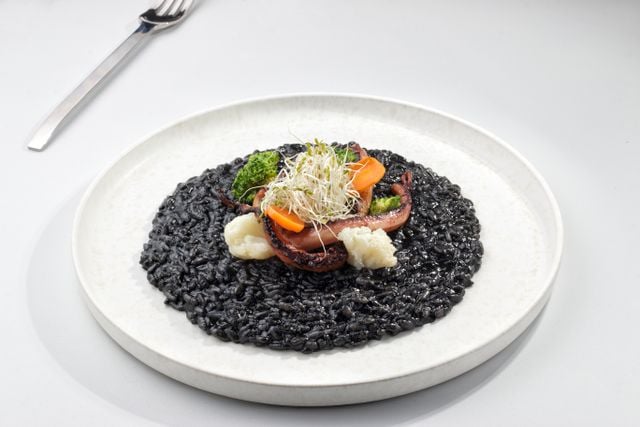
Dalmatia is also home to dishes that feel deeply connected to family meals and celebrations. Pašticada is a slow-cooked beef dish, often prepared with vino [wine], suhe šljive [prunes], spices, and homemade dumplings or gnocchi. Peka is both a word and a cooking method: meso [meat], janjetina [lamb], teletina [veal], hobotnica [octopus], or sometimes bread cooked under a bell-shaped lid with embers. If you see peka on a menu, you are looking at something that usually requires time, patience, and advance preparation.
Food Vocabulary from Istria
Istria has its own food personality. The region is shaped by the Adriatic, inland hill towns, and strong Italian and Venetian influences, so the vocabulary here often includes tjestenina [pasta], tartufi [truffles], maslinovo ulje [olive oil], vino [wine], morski plodovi [seafood], and pršut [cured ham].
One word travellers will quickly notice is tartufi. Istria is especially known for truffles, and a dish like fuži s tartufima [fuži pasta with truffles] is a classic example of the region’s Italian influence and local ingredients coming together. Fuži is a traditional Istrian pasta, often served with sauces that feel richer and more regional than a simple translated menu description can convey.
Istria is also a good place to pay attention to pršut, sir [cheese], maslinovo ulje, and local wines such as malvazija. These are not just products to taste; they are part of the region’s identity. A server recommending a local olive oil or wine is often doing more than suggesting an accompaniment. They are pointing you towards something the region is proud of.
Food vocabulary from Slavonia and Baranja
Slavonia and Baranja bring a completely different flavour to Croatian cuisine. Here, the vocabulary becomes warmer, spicier, and more inland. Instead of seeing so many coastal words such as hobotnica [octopus] or morski plodovi [seafood], travellers are more likely to come across paprika [paprika], svinjetina [pork], kobasica [sausage], kulen [spicy cured sausage], gulaš [goulash/stew], and dishes cooked slowly in large pots.
A key dish is čobanac, a rich meat stew traditionally associated with shepherds. The word comes from čoban [shepherd], which already tells you something about the dish’s origins: this is hearty, practical food, built around meso [meat], vegetables, and plenty of seasoning. It is usually made with different kinds of meat and flavoured with sweet or spicy paprika, giving it warmth, colour, and depth.
Another important word is fiš paprikaš, a paprika-based freshwater fish stew especially associated with Slavonia and Baranja. Unlike coastal fish dishes, this is river food. It is usually made with slatkovodna riba [freshwater fish] such as šaran [carp], som [catfish], or štuka [pike], cooked with onions and paprika in a large pot.
Travellers may also come across kulen, one of Slavonia’s best-known specialties. If coastal Croatia often speaks through maslinovo ulje and grilled fish, Slavonia speaks through paprika, smoke, cured meat, river fish, and generous portions.
Food vocabulary from Zagorje and Northern Croatia
In Zagorje and northern Croatia, the food vocabulary shifts again. This is where you find more sir [cheese], vrhnje [cream / sour cream], tijesto [dough], kukuruzno brašno [cornflour], and baked dishes that feel closer to Central European home cooking than Mediterranean seafood cuisine.
The most famous word here is probably štrukli, a cheese-filled dough dish that can be boiled or baked. The filling usually includes sir, and the dish may be finished with vrhnje, especially when baked in the oven. For travellers, štrukli is a perfect example of why Croatian food words deserve more than a quick translation. Calling it “cheese pastry” or “dumplings” does not quite capture its place in Croatian food culture.
Another northern dish to recognize is kukuruzna zlevka, a cornflour-based dish found in regions such as Međimurje, Zagorje, and Podravina. The word kukuruz means corn, which gives you a clue before you even know the full recipe. It can be sweet or savoury, sometimes made with med [honey], orasi [walnuts], pekmez [jam], sir, or vrhnje. It is a good reminder that Croatian regional dishes do not always fit neatly into the categories tourists expect.
Food Words from the Croatian Islands and Local specialties
Croatia’s islands add another layer to the country’s food vocabulary. Island dishes are often shaped by what is close at hand: riba [fish], slana riba [salted fish], srdele [sardines], inćuni [anchovies], kapari [capers], začinsko bilje [herbs], maslinovo ulje [olive oil], bademi [almonds], vino [wine], and janjetina [lamb]. Some specialties are tied so closely to one island that learning the name almost feels like learning a place name.
On the island of Vis, Komiška pogača is a savoury bread or focaccia-like dish filled with ingredients such as crveni luk [red onion], rajčice [tomatoes], inćuni or srdele, kapari, and spices. It is the kind of food that makes sense near the sea: salty, aromatic, and ideal with a glass of local wine.
On Rab, Rapska torta [Rab cake] is a traditional almond cake, often associated with celebration, heritage, and island pride. Its key ingredients include bademi [almonds] and maraschino liqueur, and its spiral shape makes it immediately recognizable.
Cres, meanwhile, is known for excellent janjetina [lamb], which reflects the island’s landscape and grazing traditions. Local wines also matter across the islands, where a simple word like vino may lead you to something produced nearby rather than a generic bottle.
These island foods show why Croatian cuisine rewards curiosity. A traveller who asks Što je lokalno? [What is local?] or Što preporučujete? [What do you recommend?] may end up discovering a dish that is not widely known outside one island, one town, or even one family tradition.
What Croatian Food Words Should Travellers Know First?
Some Croatian food words are worth learning before any dish names, because they appear everywhere: on menus, chalkboards, bakery signs, market stalls, wine lists, and restaurant bills. Once you know words like jelo [dish / meal], riba [fish], meso [meat], prilog [side dish], and račun [bill], a Croatian menu becomes much easier to read. You also start noticing patterns, such as juha od rajčice [tomato soup], riba na žaru [grilled fish], or palačinke s orasima [pancakes with walnuts].
The words below are not meant to cover every meal you will have in Croatia. They are the first layer: the vocabulary that helps you recognize what kind of food you are ordering, ask for the basics, and understand what the server is recommending.
Basic Croatian Food Words
Hrana
[Food]
This is the general word for food. You might use it when talking about Croatian food as a whole: hrvatska hrana [Croatian food].
Jelo
[Dish / meal]
This is one of the most useful words on a menu. A dish of the day may appear as dnevno jelo or as part of a dnevni meni [daily menu]. You will also see it in glavno jelo [main course].
Kruh
[Bread]
Bread is a common part of Croatian meals, especially with stews, grilled dishes, seafood, and anything with sauce. In a pekara [bakery], this is one of the first words to recognize.
Meso
[Meat]
A basic menu word that covers meat in general. More specific words include svinjetina [pork], janjetina [lamb], teletina [veal], govedina [beef], and piletina [chicken].
Riba
[Fish]
Essential on the coast, but also useful inland. On the Adriatic, riba often means sea fish, while in Slavonia or Baranja you may see slatkovodna riba [freshwater fish].
Povrće
[Vegetables]
Useful when reading side dishes, soups, and lighter meals. A grilled vegetable side may appear as povrće na žaru [grilled vegetables].
Sir
[Cheese]
A small word with many uses. You may see it in starters, pastries, pasta dishes, salads, and regional specialties such as štrukli, where cheese is part of the filling.
Vino
[Wine]
Croatian wine is deeply regional, so this word matters beyond ordering a drink. You may also see bijelo vino [white wine], crno vino [red wine], and domaće vino [house / local wine].
Voda
[Water]
A practical word for every meal. You may want mineralna voda [mineral water], gazirana voda [sparkling water], or negazirana voda [still water].
Menu Words in Croatian
Jelovnik
[Menu]
A useful word to recognize before you even start ordering. If you need to ask for the menu, a common phrase is Mogu li dobiti jelovnik, molim? [May I have the menu, please?].
Predjelo
[Starter / appetizer]
This is where you may find soups, seafood salads, cheese, cured meats, anchovies, octopus salad, or other small dishes before the main course.
Glavno jelo
[Main course]
The part of the menu where you will usually find fish, meat, pasta, risotto, stews, and more substantial regional dishes.
Desert
[Dessert]
Easy to recognize, but worth knowing. This is where you may find palačinke [pancakes / crêpes], cakes, pastries, or local sweets.
Juha
[Soup]
A common menu word, especially inland. You may see juha od rajčice [tomato soup], goveđa juha [beef soup], or riblja juha [fish soup]. Croatian menus often use od to show what something is made from, as in juha od rajčice [soup of tomato / tomato soup].
Salata
[Salad]
This can mean a simple side salad or a more specific dish. On the coast, salata od hobotnice [octopus salad] is a phrase worth recognizing.
Prilog
[Side dish]
A very useful restaurant word. Prilog may refer to potatoes, rice, vegetables, polenta, chard, fries, or another side served with the main dish. If a dish looks inexpensive, check whether the prilog is included or ordered separately.
Račun
[Bill]
One of the most useful words at the end of a meal. To ask for the bill politely, say Račun, molim [The bill, please].
Useful Taste Words in Croatian
Slatko
[Sweet]
Useful for desserts, pastries, cakes, sweet wines, or anything with honey, jam, fruit, or sugar. If a dish can be sweet or savoury, such as some versions of kukuruzna zlevka, this word helps you understand what style you are ordering.
Slano
[Salty / savoury]
This can describe salty food, but it is also useful when distinguishing savoury dishes from sweet ones. A slana pita would be a savoury pie, not a dessert.
Kiselo
[Sour]
A helpful word for pickled foods, sour cream, fermented cabbage, vinegar-based flavours, or dishes with a sharper taste. It is especially useful inland, where cabbage, cream, and preserved ingredients may appear more often.
Ljuto
[Spicy / hot]
Important if you are sensitive to heat. Croatian food is not always spicy, but in regions such as Slavonia, paprika-based dishes can have a warmer kick. You can ask Je li ljuto? [Is it spicy?] before ordering.
Gorko
[Bitter]
Less common than the others, but useful for certain drinks, greens, or strong flavours. You may hear it when talking about coffee, herbal drinks, or bitter notes in food.
Ukusno
[Tasty / delicious]
One of the best words to use after a good meal. You can say Bilo je ukusno [It was delicious] to compliment the food. It is simple, polite, and much warmer than just paying the bill and leaving.
Domaće
[Homemade / local]
This is not a taste word, but it is one of the most useful words on Croatian menus. Domaće often signals that something is homemade, house-made, or local: domaći kruh [homemade bread], domaća tjestenina [homemade pasta], or domaće vino [house / local wine]. On menus, words like domaći [homemade] and svježi [fresh] are common signals of quality or local appeal.
Svježe
[Fresh]
A word worth noticing, especially on the coast. Svježa riba [fresh fish] or svježi morski plodovi [fresh seafood] tells you that freshness is part of the dish’s appeal. In Croatia, where regional and seasonal ingredients matter, this word can help you spot what a restaurant is proud to serve.
What Traditional Croatian Dishes Should Tourists Recognize?
Traditional Croatian dishes are useful to know because they often tell you where you are before the server says anything. A coastal stew, an Istrian pasta dish, a Slavonian paprika stew, and a northern cheese-filled pastry all belong to different food landscapes. These are some of the dish names travellers are most likely to see, hear, or be recommended.
- Peka [food cooked under a bell-shaped lid] is both a dish and a cooking method. Meat, octopus, or sometimes bread is placed with potatoes and herbs under a bell-shaped metal or clay lid, then cooked slowly under hot embers. The result is tender, smoky, and deeply flavoured, with potatoes that absorb the juices as everything cooks.
- Brudet [fish stew] is a coastal seafood stew traditionally made with several kinds of fish and served with palenta [polenta]. It began as practical fisherman’s food, using the catch available that day, but it has become one of the classic dishes of the Adriatic.
- Crni rižot [black risotto] is usually made with squid or cuttlefish ink. Its dark colour can surprise travellers at first, but the flavour is rich, savoury, and closely tied to the coastal kitchen.
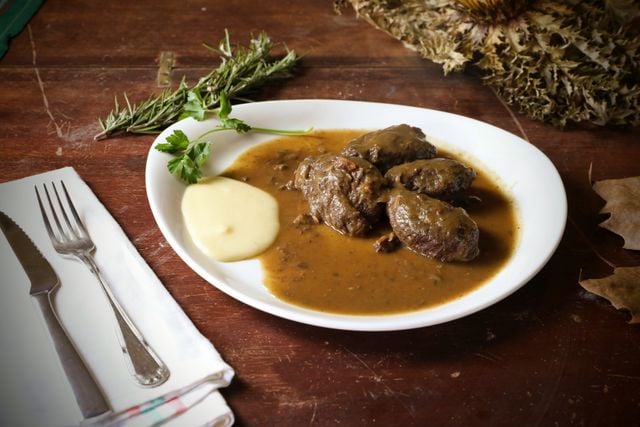
- Pašticada [Dalmatian slow-cooked beef] is often associated with family celebrations, festive meals, and special occasions. The meat is marinated, slow-cooked with wine, spices, and sometimes prunes, then usually served with gnocchi or homemade dumplings.
- Štrukli [cheese-filled dough dish] are closely linked to northern Croatia, especially Zagorje. They are made with dough and a cheese filling, then boiled or baked, sometimes with cream. They can be savoury or slightly sweet, which makes them hard to define with one English word.
- Čobanac [meat stew] is a rich dish associated with Slavonia and shepherding traditions. The word connects to čoban [shepherd], and the dish itself feels built for long days and big appetites: meat, vegetables, paprika, and slow cooking.
- Fiš paprikaš [paprika fish stew] is a freshwater fish stew, especially popular in Slavonia and Baranja. Unlike coastal fish dishes, this one usually features river fish such as carp, catfish, or pike, cooked with onions and paprika.
- Pršut [cured ham] appears across Croatia as a starter, snack, or part of a larger spread. It is not exactly the same everywhere: in Istria and Krk, it is traditionally dried in sea air, while in Dalmatia it may be smoked.
- Fuži s tartufima [fuži pasta with truffles] is one of the dishes that best expresses Istria’s food identity. Fuži are a traditional Istrian pasta, while tartufi [truffles] point to one of the region’s most famous ingredients.
- Rapska torta [Rab cake] is an almond cake from the island of Rab, traditionally linked to celebration, heritage, and local pride. Its spiral shape makes it visually distinctive, and its ingredients often include almonds and maraschino liqueur.
What Drinks Are Part of Croatian Food Culture?
In Croatia, drinks are often part of the social meaning of a meal. Wine can point to a region, coffee can stretch into a long conversation, and a small glass of rakija may say something about hospitality. Even maslinovo ulje [olive oil], although not a drink, belongs in this section because it is tasted, discussed, and valued almost like wine in coastal and Istrian food culture.
- Vino [wine] is strongly regional in Croatia, with different styles along the coast, on the islands, in Istria, and inland. Travellers may see bijelo vino [white wine], crno vino [red wine], domaće vino [house wine / local wine], or the name of a local grape variety.
- Rakija [fruit brandy] is a strong drink often connected with hospitality, family visits, celebrations, and social occasions. It may be made from different fruits or flavoured with herbs, depending on the region and household.
- Kava [coffee] is central to Croatian social life. Meeting for coffee is often less about drinking quickly and more about taking time: talking, sitting outside, watching the street, or spending time with friends.
- Maslinovo ulje [olive oil] is essential to coastal and Istrian cooking. It appears with fish, vegetables, bread, salads, seafood, and simple grilled dishes, but it is also a product people discuss with pride.
Croatian Phrases to Use at a Restaurant
Knowing Croatian food vocabulary helps you read a menu, but a few restaurant phrases can help you take part in the meal more naturally. You do not need complicated grammar to be polite. Simple expressions such as Molim [Please], Hvala [Thank you], and Račun, molim [The bill, please] are enough to make everyday restaurant exchanges smoother.
Here are some phrases you can use while eating out in Croatia:
- Imate li jelovnik? [Do you have a menu?] is useful when you sit down and need to ask for the menu. You can also say Jelovnik, molim [The menu, please] if you want something shorter and easier to remember.
- Što preporučujete? [What do you recommend?] is one of the best restaurant phrases in Croatian. It invites the server to point you towards something local, seasonal, or especially good that day.
- Što je lokalno? [What is local?] helps you move beyond the safest tourist choice. In a konoba, this question may lead to grilled fish, homemade pasta, local wine, peka, brudet, or a dish that depends on the region.
- Želio bih… [I would like…] is useful when ordering if you are male, while Željela bih… [I would like…] is used if you are female. For example, Želio bih crni rižot [I would like black risotto] or Željela bih čašu vina [I would like a glass of wine].
- Mogu li dobiti…? [Can I have…?] is a flexible phrase for ordering food, drinks, or extras. You could say Mogu li dobiti vodu? [Can I have water?], Mogu li dobiti kruh? [Can I have bread?], or Mogu li dobiti račun? [Can I have the bill?].
- Čašu vina, molim [A glass of wine, please] is a simple phrase for ordering wine. You can also ask for bijelo vino [white wine], crno vino [red wine], or domaće vino [house / local wine].
- Vodu, molim [Water, please] is practical in any restaurant or café. If you want to be more specific, ask for gaziranu vodu [sparkling water] or negaziranu vodu [still water].
- Je li ljuto? [Is it spicy?] is worth knowing if you are sensitive to heat, especially when ordering dishes with paprika or inland stews such as čobanac or fiš paprikaš.
- Bez mesa, molim [Without meat, please] is useful for vegetarians, especially in places where a dish may contain meat even if it is not obvious from the English translation.
- Bilo je ukusno [It was delicious] is a warm way to compliment the food after a meal. It works especially well in smaller restaurants, family-run places, or anywhere the server seems proud of the dish.
- Račun, molim [The bill, please] is one of the most useful Croatian restaurant phrases. You can use it at the end of a meal in a restaurant, café, or tavern.
What Should Tourists Know About Croatian Dining Etiquette?
Croatian dining is often relaxed, social, and closely connected to place. Meals are not always something to rush through, especially lunch, dinner with friends, or a long meal in a konoba. On the coast, a table might slowly fill with grilled fish, salad, bread, olive oil, and local wine. Inland, the meal may feel heartier, with stews, meat dishes, potatoes, bread, and something homemade that the host or restaurant is proud to serve.
One useful thing to understand is that food is often a conversation starter. Asking Što je lokalno? [What is local?] or Što preporučujete? [What do you recommend?] can open the door to a more interesting exchange. Croatians can be proud of regional dishes, wines, olive oils, seafood, cured meats, and family recipes, so showing curiosity is usually better than treating the menu as a simple list of options.
Coffee also has its own rhythm. Kava [coffee] is not always a quick stop between activities. Meeting for coffee can mean sitting for a while, talking, watching the street, or taking a proper pause in the day. Travellers who understand this will enjoy cafés more, especially in squares, seaside towns, and neighbourhood kafići.
Wine is also part of the dining culture, not just an extra drink. Asking for domaće vino [house / local wine] can be a good way to try something regional, especially in Istria, Dalmatia, Slavonia, or on the islands. The same is true of maslinovo ulje [olive oil] in coastal regions, where it may be served with pride and treated as a local product worth noticing.
Good manners do not require complicated Croatian. Saying dobar tek [enjoy your meal], hvala [thank you], and bilo je ukusno [it was delicious] already goes a long way. If someone offers more food, Ne, hvala [No, thank you] is a polite refusal, while Da, molim [Yes, please] lets you accept warmly. The important thing is to be patient, curious, and appreciative, especially when someone is sharing something local.
How Can Croatian Lessons Help You Understand Food Culture?
Croatian lessons can help travellers do more than memorize dish names. A native Croatian teacher can show you how words sound in real conversation, how to pronounce letters such as č, ć, š, and ž, and how to use restaurant phrases naturally rather than reading them from a phone at the table.
This is especially helpful with food culture because many Croatian words carry regional and social meaning. A teacher can explain the difference between a restoran, a konoba, and a gostionica; help you practise asking Što preporučujete? [What do you recommend?]; and show you how to talk about dishes such as peka, brudet, štrukli, or čobanac without flattening them into simple English translations.
At Language Trainers, both online and face-to-face Croatian lessons can be personalized around the way you plan to use the language. One learner may want phrases for restaurants, bakeries, markets, and wine tastings. Another may be preparing for a trip to Dalmatia, a family visit, a business stay in Zagreb, or a longer journey through Istria, Slavonia, and the islands. Lessons can take place face-to-face or online, depending on your location, schedule, and goals.
Native teachers are also cultural ambassadors. They can help you understand when a phrase sounds polite, how to compliment a meal, what to say when someone offers more food, and why regional pride matters so much in Croatian cuisine. That kind of guidance can make your travel Croatian feel more natural, respectful, and useful.
As Ashley Gibb from Calgary, who took a 50-hour Croatian course, shared:
“I have spent the last 8 months working with Language Trainers for beginner level Croatian lessons and I have truly had the most amazing experience! Ana has been a supportive and knowledgeable tutor, and I have looked forward to my lessons each week. I began my lessons knowing little to no Croatian and after 8 months, I have learned how to make simple sentences and engage in some small-talk.”
If you want to understand Croatian food culture beyond the menu, contact Language Trainers to ask about a free trial Croatian lesson.
→Sign Up Now: Free Trial Croatian Lesson With a Native Teacher!←
5 Questions About Croatian Food Vocabulary and Culture
1. What Croatian food words should tourists learn first?
Tourists should start with the words they are most likely to see on menus and hear in restaurants. Some of the most useful are hrana [food], jelo [dish / meal], kruh [bread], meso [meat], riba [fish], sir [cheese], vino [wine], and voda [water].
It also helps to learn basic menu words such as predjelo [starter], glavno jelo [main course], juha [soup], salata [salad], prilog [side dish], and račun [bill]. With just these words, Croatian menus become easier to understand, especially when combined with practical phrases like Račun, molim [The bill, please] and Što preporučujete? [What do you recommend?].
2. What does konoba mean in Croatia?
Konoba means a traditional tavern or local eating place, often associated with regional food, wine, and a more rustic atmosphere. It is one of the most useful Croatian food words for travellers because it usually suggests a meal with a stronger sense of place than a standard restaurant.
On the coast, a konoba may serve grilled fish, octopus, black risotto, seafood stew, olive oil, and local wine. Inland or on the islands, the menu may include meat dishes, homemade pasta, cured ham, cheese, or whatever the region does best. If you want to experience Croatian food beyond the most tourist-friendly menus, a good konoba is often a great place to start.
3. What is peka in Croatian cuisine?
Peka is both a cooking method and the name people use for food prepared that way. Meat, octopus, or sometimes bread is placed with potatoes and herbs under a bell-shaped metal or clay lid, then cooked slowly with hot embers.
The result is tender, rich, and full of flavour because the food roasts slowly while the potatoes absorb the juices. Peka is not usually a quick dish, so restaurants may ask you to order it in advance. For travellers, it is one of the best examples of how a Croatian food word can describe a whole cooking tradition, not just a single menu item.
4. Is Croatian food mostly Mediterranean or Central European?
Croatian food is both Mediterranean and Central European, depending on where you are. Along the Adriatic coast and in Dalmatia, menus often feature riba [fish], hobotnica [octopus], morski plodovi [seafood], maslinovo ulje [olive oil], herbs, wine, and dishes such as brudet, crni rižot, and peka.
Inland, the food becomes heartier and more Central European, with more meso [meat], paprika, kobasice [sausages], cabbage, potatoes, stews, freshwater fish, cheese, and dough dishes. Slavonia and Baranja are known for dishes such as čobanac and fiš paprikaš, while Zagorje and northern Croatia are closely linked to štrukli and other comforting baked or boiled dishes. So, rather than one single cuisine, Croatia is better understood as a collection of regional food traditions.
5. How do you say “Enjoy your meal” in Croatian?
You say Dobar tek [Enjoy your meal] in Croatian. It is one of the most important food phrases to know because you may hear it from a server, host, or someone at the table when the food arrives.
You can also say Dobar tek to other people before they begin eating, much like “bon appétit.” After the meal, a useful compliment is Bilo je ukusno [It was delicious], especially if you are eating in a family-run restaurant, a konoba, or someone’s home.